
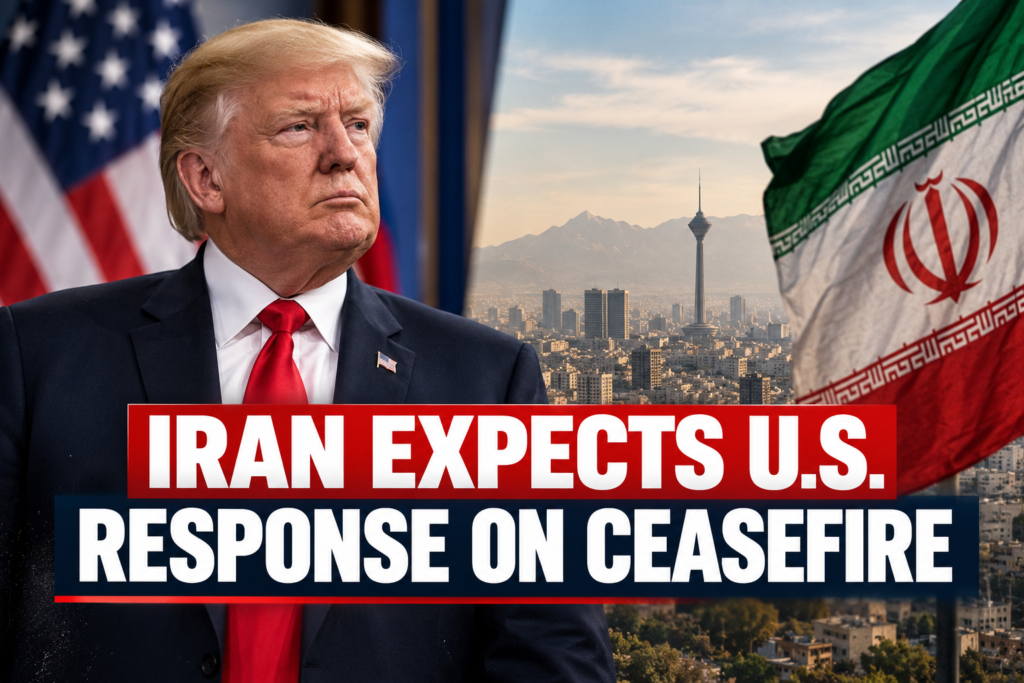
Iran War Update September 29, 2026
Iran says it expects a formal U.S. answer on Tuesday to its Iran ceasefire proposal, a seven-day plan that would pause fighting and reopen the Strait of Hormuz in phases. President Donald Trump has already rejected the plan in public, yet both sides confirm that messages are still moving through mediators.
Quick Summary
Tehran wants a U.S. reply through Qatar. Washington says nothing has been offered, though a U.S. official describes talks as constructive. Oil near $100 a barrel and record diesel prices show how much the outcome matters beyond the region.
What the Iran ceasefire proposal includes
Iran presented the plan last week during the U.N. General Assembly in New York. It calls for a seven-day ceasefire and a phased reopening of the Strait of Hormuz. In return, Iran wants the United States to meet the conditions in a memorandum of understanding signed in mid-June.
That agreement fell apart after several weeks. A U.S. official says Iran broke it by firing on commercial vessels, and adds that Washington is skeptical of Iranian promises and wants assurances that Tehran is serious.
Foreign Minister Abbas Araghchi said late Monday that Iran has made no changes to the plan. He said it was passed to the Americans through a Qatari intermediary, and that Qatari officials hope a final U.S. response will arrive Tuesday. Iranian state media also said Iran’s U.N. delegation has no plans for direct talks with the United States and would return to Tehran on Tuesday.
Trump rejects the plan, but talks continue
Mr. Trump turned down the proposal over the weekend. “They want to make a deal, but it is not the deal that I want to make,” he told Axios, adding that resuming strikes is not off the table. On Monday he confirmed that negotiators exchanged messages through mediators, without giving details.
Sanctions relief remains disputed
Axios reported that Mr. Trump is open to sanctions relief in exchange for progress on Iran’s nuclear program. He denied it on Truth Social. Yet a U.S. official told CBS News that he would consider relief and the release of frozen funds if there is concrete nuclear progress. The official said there will be no deal without it, and that the sides still disagree on timing and who moves first.
An Iranian diplomatic source told CBS News the main obstacle is that Mr. Trump does not appear to have a clear position on what he wants.
Tehran’s warnings grow sharper
Alongside diplomacy, Iranian officials are sending harder messages. Parliament Speaker Mohammad Bagher Ghalibaf, who is also Iran’s chief negotiator, said that if Iran’s security is not guaranteed, no infrastructure in the region will be safe. Araghchi told NBC that Iran is ready for either diplomacy or a return to fighting, and that the choice belongs to Mr. Trump.
A Revolutionary Guard spokesman also said Iran is developing new weapons, though he gave no specifics. Republican Sen. John Kennedy called Iran’s plan “not a serious offer,” but acknowledged the strait’s partial closure is hurting Americans and said he would not support U.S. ground troops in Iran.
Oil, bonds and fuel prices feel the strain
Markets are reacting to each turn. On Monday, Brent crude rose 2.8% to $100.19 a barrel, and the S&P 500 fell 0.8% in late-morning trading. U.S. bond yields rose to their highest levels in roughly two decades, according to The Associated Press.
Drivers are paying more, too. AAA data shows regular gasoline at nearly $4.48 a gallon, up from $3.13 a year ago. Diesel hit a record $6.53 on September 22 and stood at $6.45 on Monday. Mr. Trump said he is “very seriously” considering a ban on diesel exports. Goldman Sachs says a short pause could lower costs at first, but a long one could raise gasoline prices.
Pressure builds inside Iran
Iran’s rial fell past 2.4 million per U.S. dollar on the free market, a record low, based on Pashizi data. Iran’s Statistical Center puts annual inflation at 61.4% for August. New U.S. sanctions on Iran’s aviation sector have also grounded flights, leaving some travelers to leave by road. Iran has filed a complaint with the International Civil Aviation Organization.
For background on earlier ceasefire diplomacy, see Al Jazeera’s April report on Araghchi’s response to a two-week truce.
What to watch next
The next signal is whether Qatar delivers a U.S. reply on Tuesday, and whether that reply differs from Mr. Trump’s public rejection. The gaps on nuclear commitments, sanctions and sequencing remain wide. Until they narrow, the Strait of Hormuz stays a major driver of energy prices.
Frequently Asked Questions
What does Iran’s seven-day plan propose?
A seven-day ceasefire and a phased reopening of the Strait of Hormuz, tied to U.S. compliance with the June memorandum of understanding.
When does Iran expect a U.S. reply?
Araghchi said he expects a formal answer on Tuesday, September 29, delivered through Qatari mediators.
Has Trump accepted the plan?
No. He rejected it over the weekend, though he says he expects talks to resume and confirmed indirect exchanges on Monday.
Is sanctions relief on the table?
Accounts conflict. Mr. Trump says he offered “NOTHING,” while a U.S. official says relief is possible only with concrete nuclear progress.
How is the standoff affecting U.S. prices?
Brent crude is near $100 a barrel, gasoline is about $4.48 a gallon, and diesel set a record of $6.53 on September 22.