Breaking Weather Update
Hurricane Isaias landfall happened late Friday near Destin, Florida, when the storm reached the Panhandle as a Category 2 hurricane with 105 mph winds, based on NPR’s report citing the National Hurricane Center. By Saturday, nearly 900,000 customers across Florida, Alabama and Georgia had lost power, and two people were reported dead after trees fell.
Isaias came ashore near Destin as a Category 2 hurricane, then weakened quickly as it moved over Alabama. Two deaths involved falling trees, power outages reached roughly 900,000 customers, and flooding and tornado risks continue as the remnants move toward Georgia and the Carolinas.
What We Know About the Hurricane Isaias Landfall
The National Hurricane Center placed landfall at about 8:30 p.m. local time near Destin, according to NBC News’ live coverage. Some outlets list 9:30 p.m. because they use Eastern time. Both describe the same event.
Forecasters had said the storm might reach Category 3 strength before arriving. It did not. By the 11 p.m. Eastern advisory, sustained winds had dropped to 90 mph, making Isaias a Category 1 hurricane, WFTV reported. The system then became post-tropical, and the hurricane center ended its tropical alerts, The Washington Post reported.
It was also the first hurricane to hit the United States since Hurricane Milton in October 2024, CNN reported.
| Detail | What was reported |
|---|---|
| Landfall location | Near Destin, Florida |
| Strength at landfall | Category 2, 105 mph winds |
| Time | About 8:30 p.m. Central (9:30 p.m. Eastern), Friday |
| Highest gust reported | 117 mph at Pensacola Beach |
| Storm surge | Roughly 5 to 6 feet |
| Power outages | Nearly 900,000 customers in Florida, Alabama and Georgia |
| Deaths | Two, both tied to falling trees |
Winds, Surge and Rain Along the Coast
Wind gusts reached 117 mph at Pensacola Beach and 116 mph at Santa Rosa Beach, the Post reported. Milton, Florida, recorded a 115 mph gust.
Storm surge was lower than the worst-case forecast. NPR said it measured about 5 feet, compared with the 6 to 9 feet forecasters had warned about if the storm arrived at peak high tide. High tide in Destin came roughly two hours after landfall, which helped limit the water rise. The Post gave a surge figure of up to 6 feet.
Rain was heavy near Fort Walton Beach, where 8.04 inches fell. The National Weather Service issued a flash flood emergency for life-threatening flooding, and radar suggested some areas may have received close to a foot. The agency also issued a rare extreme wind warning for Okaloosa, Santa Rosa, Walton and Escambia counties.
Two Deaths Linked to Falling Trees
A woman died in Escambia County, near the Alabama line, when a large tree fell onto her home. A sheriff’s office spokesperson told the Post that rescue crews found her unresponsive at 8:48 p.m., close to the time of landfall.
A second death happened early Saturday in Birmingham, Alabama, in a similar way, according to Fire Chief Cory D. Moon, as reported by the Post. CNN’s live coverage also described at least two deaths.
Power Outages and Cleanup After Hurricane Isaias
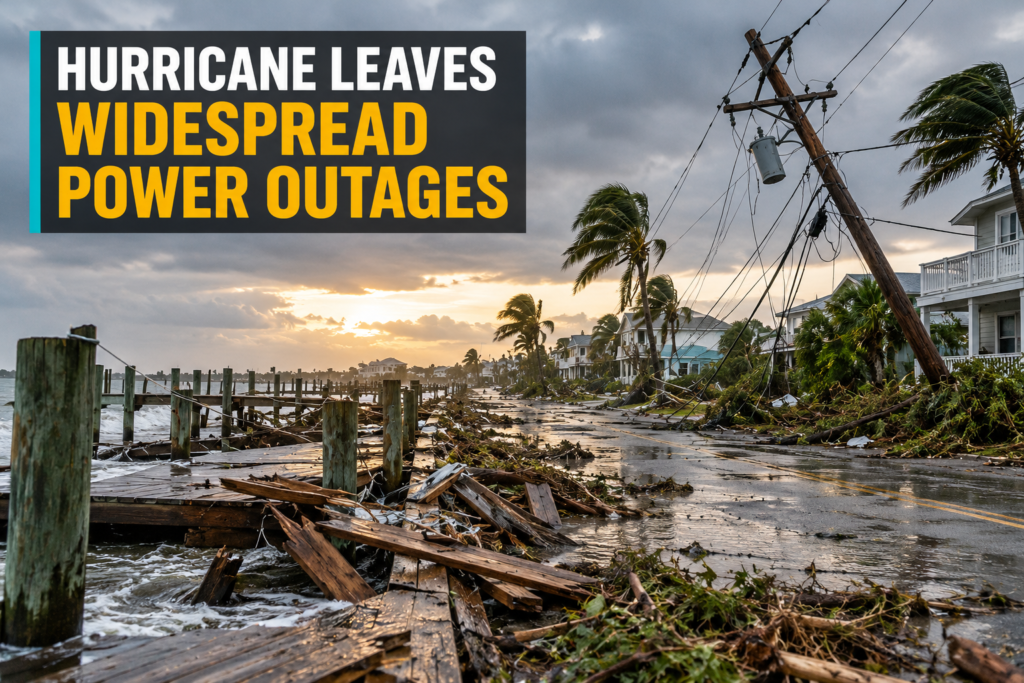
PowerOutage.us data cited by NPR showed nearly 900,000 customers without electricity on Saturday. Other outlets, including FOX10 in Mobile, described hundreds of thousands in the dark across Alabama and the Panhandle. Totals shift as crews restore service, so the exact count changes through the day.
Gov. Ron DeSantis said crews worked overnight to clear debris from key bridges and roads, including Interstate 10. He said state-owned coastal bridges and major roads had reopened. He also said no requests for search and rescue had come in yet, calling that a cautiously good sign.
Local conditions were rougher. Emergency officials in Santa Rosa County said most roads were blocked by fallen trees or power lines, and they asked residents to avoid travel unless necessary. CNN reported that Northwest Florida Beaches Airport had reopened, while the Destin, Fort Walton Beach and Pensacola airports stayed closed to commercial service.
Evacuations and Preparations Before the Storm
Residents in Pensacola and Destin boarded windows and stacked sandbags on Friday. Several counties in southern Alabama and the Panhandle issued evacuation advisories, though only some were mandatory. The Pensacola airport shut down Friday morning.
Utilities also planned shutdowns. Officials on Okaloosa Island and Pensacola Beach said they would turn off water and sewer service in advance, because surge could otherwise cause a complete system failure.
Where the Remnants Head Next
The center of the weakened system was near Montgomery, Alabama, before dawn Saturday. Forecasters said northeast Georgia and the western Carolinas could see locally significant flooding, with some rain totals of 6 to 8 inches.
A few tornadoes are possible in eastern Georgia and southern South Carolina. On Sunday, scattered downpours move into the Mid-Atlantic, with a tornado threat lingering in eastern North Carolina and southeast Virginia. Rain across the Ohio Valley, Northeast and New England should clear by Monday.
No other hurricanes or tropical storms are forecast to form in the Atlantic over the coming week, the Post reported.
Frequently Asked Questions
1Where did Hurricane Isaias make landfall?
It came ashore near Destin, Florida, late Friday as a Category 2 hurricane with 105 mph winds.
2How many people died?
Two deaths were reported: one in Escambia County, Florida, and one in Birmingham, Alabama. Both involved falling trees.
3How many customers lost power?
Nearly 900,000 customers in Florida, Alabama and Georgia were without power on Saturday, based on PowerOutage.us data. Numbers change as repairs continue.
4Was Isaias still a hurricane on Saturday?
No. It weakened to a Category 1 hurricane Friday night, then became a post-tropical storm, and the National Hurricane Center ended its tropical alerts.
5What risks remain?
Flooding is possible in northeast Georgia and the western Carolinas, and a few tornadoes could form in eastern Georgia and southern South Carolina. Rain moves into the Mid-Atlantic on Sunday.
Details may change as officials update damage and outage figures. Residents should follow guidance from local emergency management and the National Weather Service.