New York • Education • Developing
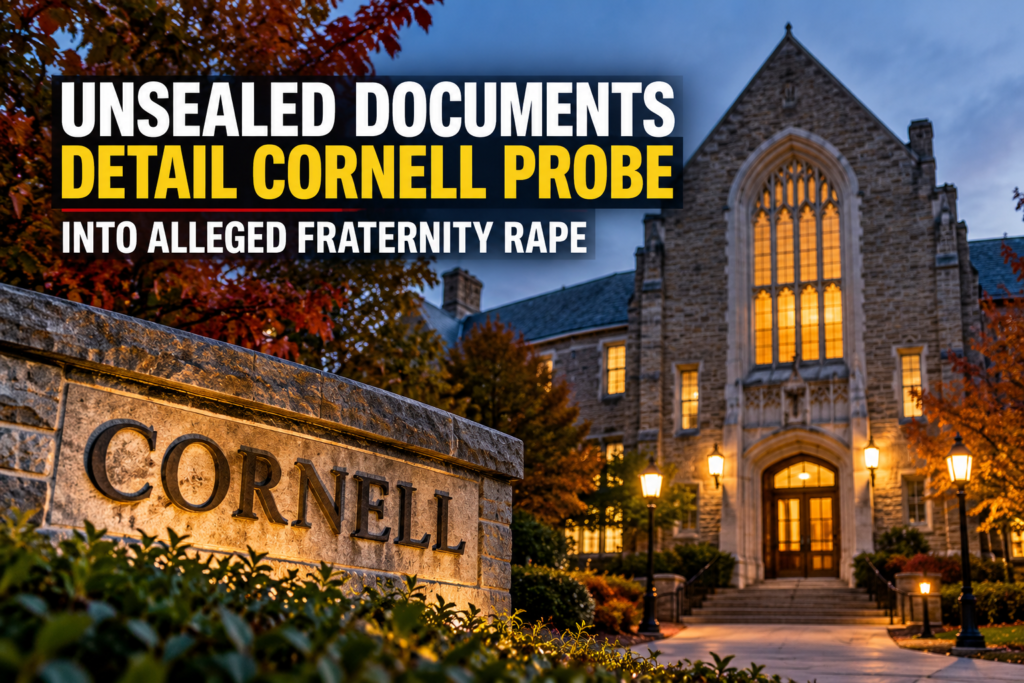
New York Gov. Kathy Hochul has named a Cornell special prosecutor to take over an investigation into an alleged 2024 sexual assault connected to a fraternity house in Ithaca. In an executive order signed Thursday, she appointed state Attorney General Letitia James to lead the matter, according to ABC News. The claims come from a civil lawsuit and have not been proven in court.
Quick Summary
The governor said she lost confidence in the Tompkins County district attorney’s ability to handle the case and moved it to the attorney general’s office. Cornell has also agreed to an outside review of its own response. All allegations remain unproven, and no outcome has been announced.
Why the governor stepped in
Hochul said newly released information raised serious questions about how the Cornell Police Department investigated the case. She also questioned the decision by the Tompkins County district attorney not to prosecute at the time. In her statement, she said this had weakened her faith, and the public’s faith, in the district attorney’s ability to handle the case now, as Spectrum News reported.
The order takes the case away from District Attorney Matthew Van Houten, who has faced mounting criticism over how his office first handled the woman’s allegations, UPI reported. Reporting republished by Gulf News says critics argued the original investigation ended too quickly.
Van Houten did not immediately respond to a request for comment Thursday night, according to WAMC.
What a Cornell special prosecutor changes in practice
In practical terms, the order moves responsibility for the case from the county district attorney’s office to the attorney general’s office. Hochul said she signed an executive order appointing James’s office as the special prosecutor, according to CBC News.
None of the reports reviewed for this article describe a timeline for the new review. They also do not mention any charges. Readers should treat the appointment as a change in who is handling the case, not as a finding about what happened.
Key facts at a glance
| Detail | What reports say |
|---|---|
| Who made the appointment | Gov. Kathy Hochul, by executive order |
| Who was appointed | Attorney General Letitia James’s office |
| Date | Thursday, October 1, 2026 |
| Case moved from | Tompkins County District Attorney Matthew Van Houten |
| Alleged incident | October 2024, at a fraternity house on Cornell’s campus |
| Source of allegations | A civil lawsuit filed by an unnamed woman |
| Cornell’s response | Outside lawyers to review how the university handled the claims |
How the case reached this point
The matter drew new public attention after an unnamed woman filed a civil lawsuit. It alleges she was sexually assaulted at a fraternity house on Cornell’s campus in October 2024. Those are claims made in a lawsuit. They are not court findings.
Earlier this week, Van Houten announced that he would reopen the investigation after reviewing new information in the lawsuit, CBC reported. That decision followed pressure from the public and from politicians, including the governor.
Within days, Hochul went further and removed the case from his office. The sequence shows how quickly the matter moved once the lawsuit and related court records became public.
What Cornell has said and done
On Wednesday, Cornell agreed to bring in outside lawyers to independently examine how the university handled the woman’s allegations, according to CBC. The university has also said it suspended the Chi Phi fraternity indefinitely and disciplined or expelled some students after the report was made.
A Cornell spokesperson told WAMC that the university supports the governor’s decision to hand the case to James. The statement suggests the school does not oppose the change in leadership.
What the unsealed court documents show about the university’s review
Court documents unsealed in a New York state court this week describe the scale of Cornell’s internal disciplinary process. The Washington Post reported that the review involved more than 50 interviews with 32 witnesses.
This article does not repeat the specific allegations. The numbers matter here because they show the university’s process was extensive. They do not show how the case should end, and the special prosecutor will decide what evidence matters under the law.
Lawmakers and the wider debate
The case has also reached Albany. WAMC reported that several New York lawmakers are pushing to strengthen the state’s sexual assault laws while Cornell and the county prosecutor face heavy criticism over their handling of the matter. No specific bill details were confirmed in the reports reviewed here.
What to watch next for the Cornell special prosecutor
Several developments could follow, but none has been confirmed. Readers can look for official statements from the attorney general’s office. They can also watch for updates on the outside review at Cornell and for further court filings in the civil lawsuit.
Until then, the confirmed facts about the Cornell special prosecutor appointment are limited. A new prosecutor now leads the review, the university is facing an independent check of its own conduct, and the underlying allegations remain unproven.
Frequently asked questions
Who is the Cornell special prosecutor?
New York Attorney General Letitia James’s office was appointed by Gov. Kathy Hochul in an executive order signed Thursday.
Why did Hochul make the appointment?
She said newly released information raised questions about the earlier investigation and weakened her faith in the district attorney’s ability to handle the case.
Who handled the case before?
Tompkins County District Attorney Matthew Van Houten, who announced earlier this week that he would reopen the investigation.
What has Cornell done in response?
Cornell agreed to bring in outside lawyers to review its handling of the allegations. It also says it suspended the Chi Phi fraternity indefinitely and disciplined or expelled some students.
Have the allegations been proven in court?
No. The claims come from a civil lawsuit, and the reports reviewed describe no court finding or announced charges.