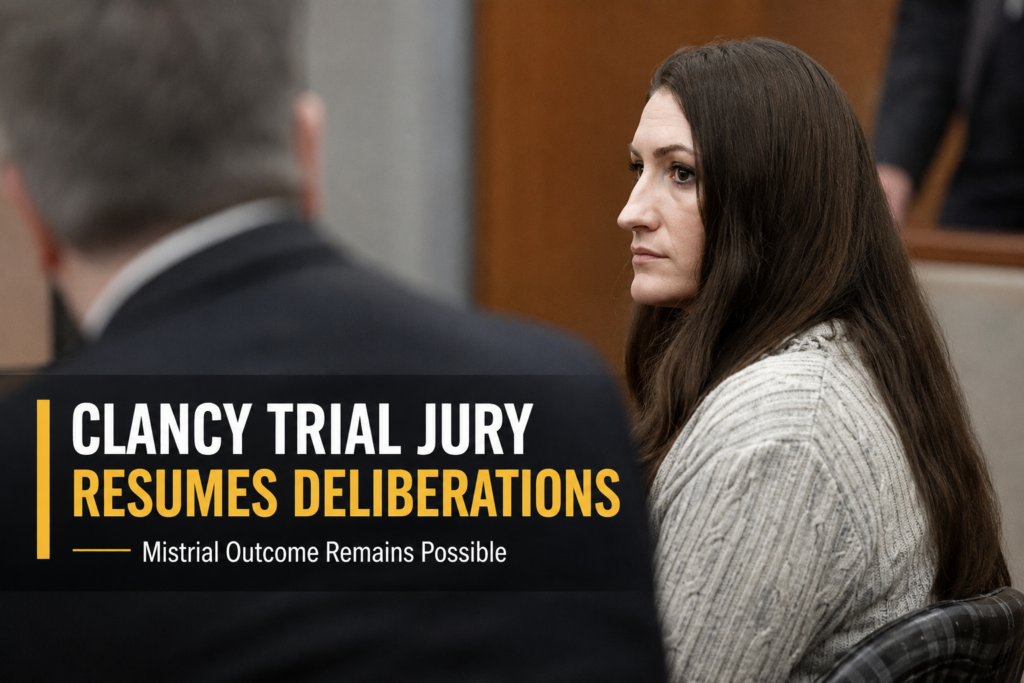
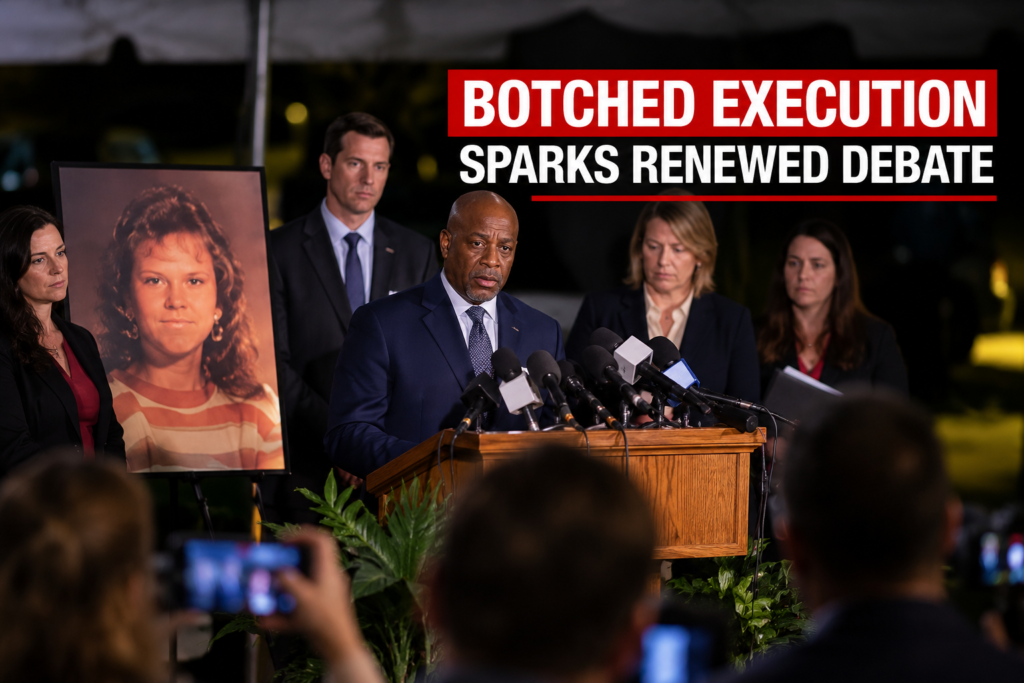
The Christa Pike execution in Tennessee ended without her death on Wednesday night, after state officials administered two doses of a lethal injection drug, according to prison officials and her lawyers. Gov. Bill Lee responded by halting the one remaining execution planned for 2026 and ordering a third-party review. The outcome has renewed questions about how Tennessee carries out the death penalty.
What Happened in the Christa Pike Execution Attempt
Pike’s execution was scheduled for Wednesday, Sept. 30, at Riverbend Maximum Security Institution in Nashville. The day did not go as planned. An appeals court paused the proceedings about an hour before the set time, PBS NewsHour reported. Local coverage of the Associated Press report said the U.S. Supreme Court later cleared the way for the execution to go forward.
Late that night, officials said the effort had failed. CBC News reported that prison officials and Pike’s lawyers confirmed she survived the attempt. Her attorneys said in court filings that she received two doses of pentobarbital. They also filed an emergency motion during the process, asking a federal court to stop it.
The Tennessee Department of Correction said it followed every step of its approved protocol. It added that the protocol does not allow additional procedures beyond those carried out that evening, and that Pike was moved to an off-site medical facility. ABC News later reported that her attorneys said she was unconscious and on a ventilator in a hospital. Her condition may have changed since then.
In the Christa Pike execution case, the Death Penalty Information Center said she is the first person reported to have survived a lethal injection after receiving the drugs. Its executive director called the case unlike any other botched execution of the modern era, ABC reported.
Governor Lee Halts Executions and Orders a Review
Lee described the incident as “deeply disturbing,” according to CNN’s reporting. He announced that the remaining scheduled execution would not be carried out this year and ordered an outside review of what happened. The state attorney general’s office said the governor was right to call for an investigation.
The decision after the Christa Pike execution attempt marks a change in tone. Earlier this year, after another troubled attempt in May, WPLN reported that Lee had maintained the Department of Correction did nothing wrong and that no independent investigation was needed.
Not everyone wants a pause. ABC reported that Sen. Marsha Blackburn, who is running for governor, called on the state to bring back the electric chair. CNN reported that the incident also reignited debate over the state’s execution procedures, including its single-drug approach.
Key Facts About the Case
The Road to Wednesday: Legal Fights Over the Protocol
Before the Christa Pike execution date arrived, her lawyers spent months challenging how Tennessee would carry out her sentence. They argued that a blood disorder and small veins made a lethal injection especially risky for her. ABC reported that a court motion described a substantial risk of unnecessary suffering.
Those concerns gained weight in May. According to local reporting, the state called off Carruthers’ execution after staff could not establish the required IV lines. His case was one of several events this year that put the state’s procedures under a spotlight.
In August, the Tennessee Supreme Court sent Pike’s claims to a special master. NewsChannel 5 reported that Senior Judge Mark Ward would hold a hearing and examine her medical issues, her history of trauma, proposed alternative methods and whether a spiritual adviser could be present. It was the first case to move forward under the court’s recently amended process.
The method itself is also recent. CNN noted that Tennessee announced in 2024 that it was moving from a three-drug lethal injection to a single drug, pentobarbital. That change came after an earlier review found problems with how the state had tested its execution drugs.
Who Christa Pike Is and Why She Was on Death Row
Pike was 18 when Slemmer, also a teenager, was killed in 1995. Pike and her then-boyfriend, Tadaryl Shipp, were convicted in the case. She received a death sentence and became the last person in Tennessee sent to death row for a crime committed at that age, according to the Tennessean.
Her attorneys have said she suffered severe abuse as a child and has mental health diagnoses, and they have said she feels deep remorse. Supporters of the sentence point to the seriousness of the crime and the loss felt by Slemmer’s family. Reporting before the execution date noted that Tennessee had not put a woman to death in more than two centuries.
Where the Death Penalty Stands Across the Country
Tennessee’s pause comes as other states move in the opposite direction. As of Sept. 1, there had been 23 executions in six states this year, 13 of them in Florida, according to States Newsroom citing the Death Penalty Information Center. Florida also set a state record with 19 executions in 2025.
The picture is uneven. Tennessee is pausing while Florida continues at a rapid pace. Methods differ too. Florida uses a three-drug sequence, while Tennessee has relied on one drug since 2024.
What Happens Next
The immediate questions after the Christa Pike execution attempt are about her health and legal status. Al Jazeera reported that what happens to her next is unclear, and the state has not said how it will proceed.
The third-party review is the next major step. Officials have not yet detailed what it will examine. The pause covers all executions for the rest of 2026, so no others are expected in Tennessee this year.
Frequently Asked Questions
Q1Was the Christa Pike execution carried out?
No. Officials said two doses were given but the execution was not completed. She was taken to an off-site medical facility.
Q2What did Governor Bill Lee do afterward?
He halted the remaining execution scheduled for 2026 and ordered a third-party review of what happened.
Q3What drug does Tennessee use?
Tennessee switched in 2024 from a three-drug method to a single drug, pentobarbital, according to CNN.
Q4What did the Department of Correction say?
It said it followed every step of its approved protocol and that the protocol does not permit additional procedures beyond those carried out.
Q5Why was Pike on death row?
She was convicted in the 1995 killing of Colleen Slemmer, a fellow Job Corps student in Knoxville, and sentenced to death at age 18.