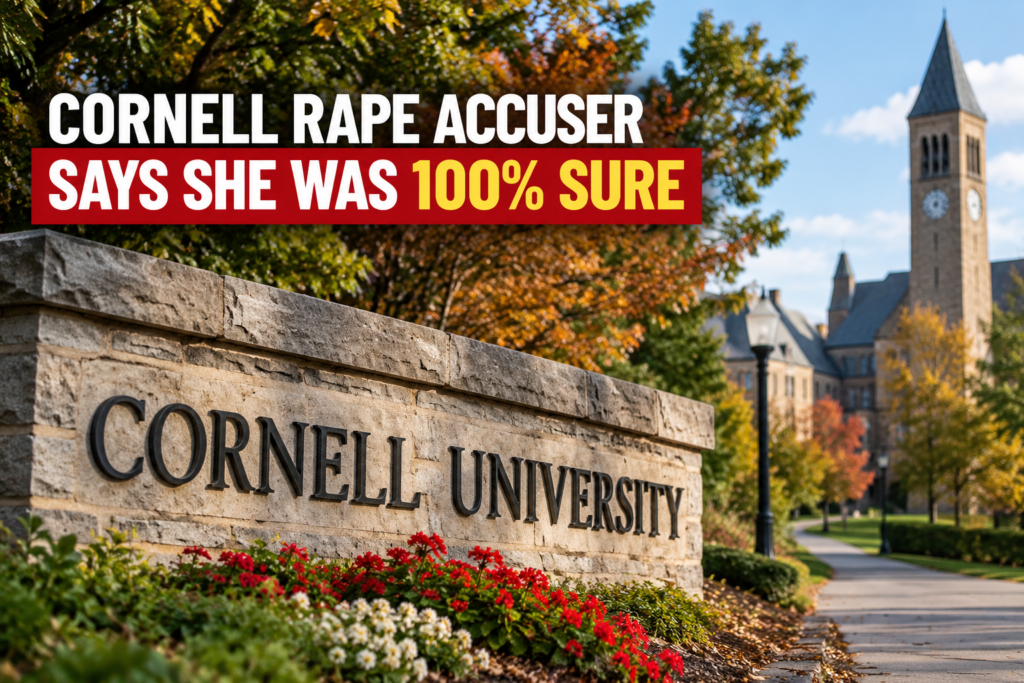
A Cornell fraternity lawsuit is drawing fresh attention after CBS New York reported on a police interview transcript that has not been made public. According to the Associated Press, the woman who filed the case told campus police weeks after the alleged October 2024 incident that she could “say with 100% confidence I was raped.” The report raises new questions about the local district attorney’s decision not to prosecute anyone at the time. The claims remain allegations and have not been proven in court.
CBS New York says it obtained a transcript of the woman’s 2024 interview with Cornell campus police. District Attorney Matthew Van Houten says her first account did not include claims of being drugged, incapacitated or forced, yet he has reopened the investigation based on new information in the Cornell fraternity lawsuit. Gov. Kathy Hochul says Cornell has agreed to an independent review by outside lawyers.
What the Police Transcript Reportedly Says
CBS New York reported that it obtained a transcript of the woman’s interview with investigators. The transcript has not been publicly released, and its contents come from CBS and the AP’s account of that report.
The woman first went to Cornell’s campus police about three weeks after the alleged attack, which began on Oct. 19, 2024. She returned on Nov. 14 and 15, 2024, to be interviewed.
According to the report, she described what happened as coercion. CBS News also reported that she said she was fully incapacitated before some of the sexual abuse took place.
The woman acknowledged that she had been drinking alcohol and had used drugs the night she visited the Chi Phi fraternity house. She also said she had gaps in her memory of the evening.
Key Facts at a Glance
| Detail | What reports say |
|---|---|
| Alleged incident | Began Oct. 19, 2024, at the Chi Phi fraternity house |
| Reported to police | About three weeks later, to Cornell campus police |
| Police interviews | Nov. 14 and 15, 2024 |
| Transcript source | Obtained by CBS New York; not publicly released |
| Civil lawsuit | Filed Sept. 14, 2026, in New York state court |
| Criminal charges | None so far; the district attorney has reopened the probe |
| Outside review | Cornell agreed to bring in outside lawyers, per Gov. Hochul |
District Attorney Reopens the Investigation
Tompkins County District Attorney Matthew Van Houten has said in recent days that the woman’s first account to police did not include allegations that she was drugged, incapacitated beyond the ability to consent, or forced into sex.
At the same time, he said he reopened the investigation because of new information in the Cornell fraternity lawsuit. The district attorney’s office had earlier told CBS New York that it found insufficient evidence to bring charges after reviewing the police investigation.
The reported transcript appears to differ from how the district attorney has described that first account. That gap is what has raised new questions about the earlier decision. The transcript itself has not been released, so the full context of her statements is not yet public.
Cornell Agrees to an Independent Review
Gov. Kathy Hochul announced on Wednesday that Cornell has agreed to bring in outside lawyers to independently investigate how the university handled the woman’s allegations.
Cornell has said its own investigation into the incident has concluded. The university also said the Xi chapter of Chi Phi remains barred from campus, and that federal privacy law prevents it from sharing individual disciplinary outcomes. Cornell has said it will respond to the lawsuit through the legal process.
According to the complaint, Cornell opened its investigation in January 2025 and held at least 12 hearings that May. Those details come from the lawsuit’s own account, as described in local reporting by FingerLakes1.
What the Cornell Fraternity Lawsuit Claims
The lawsuit was filed on Sept. 14 in state Supreme Court in New York County, according to local reporting. It names Cornell, the local and national Chi Phi organizations, Tri Delta’s local and national organizations, a downtown Ithaca bar and seven current or former students.
The complaint accuses Cornell and Chi Phi of failing to protect the woman from foreseeable harm and of not adequately supervising activity at the fraternity house. Reports say it includes claims such as negligence and breach of contract, and it seeks damages.
Responses so far
Chi Phi’s national headquarters called the allegations deeply concerning. It said sexual violence conflicts with the fraternity’s principles and stressed the need for a fair legal process.
None of the seven men named in the suit has been criminally charged. The claims have not been tested in court, and the defendants have not been found liable for anything.
What Happens Next
Three separate tracks are now moving at once. The district attorney is re-examining the criminal case, outside lawyers are expected to review Cornell’s handling of the allegations, and the Cornell fraternity lawsuit will proceed through the courts.
No findings have been announced from the reopened investigation or the independent review. Until they are, the details above remain claims and reports, not established facts. This story is developing, and details may change as new information is confirmed.
Frequently Asked Questions
What does the reported police transcript say?
CBS New York reported that the woman told investigators she could say with 100% confidence she was raped. It also reported that she described coercion and said she was fully incapacitated before some of the abuse.
Has anyone been criminally charged?
No. None of the seven men named in the Cornell fraternity lawsuit has been charged. The district attorney’s office earlier cited insufficient evidence, but it has since reopened the investigation.
What did the district attorney say about her first account?
Matthew Van Houten has said her first account to police did not include claims that she was drugged, incapacitated beyond the ability to consent, or forced into sex.
What did Gov. Hochul announce?
Hochul announced on Wednesday that Cornell agreed to bring in outside lawyers to independently investigate how the university handled the woman’s allegations.
How has Cornell responded to the lawsuit?
Cornell says its investigation has concluded and the Chi Phi chapter remains barred from campus. It says privacy law limits what it can share and that it will respond through the legal process.