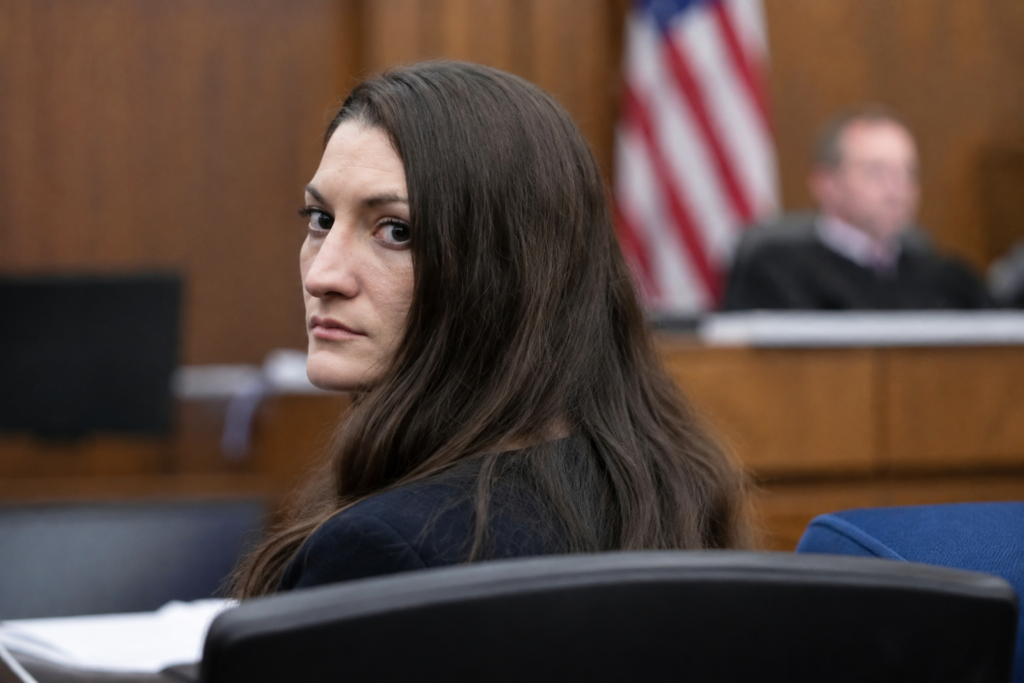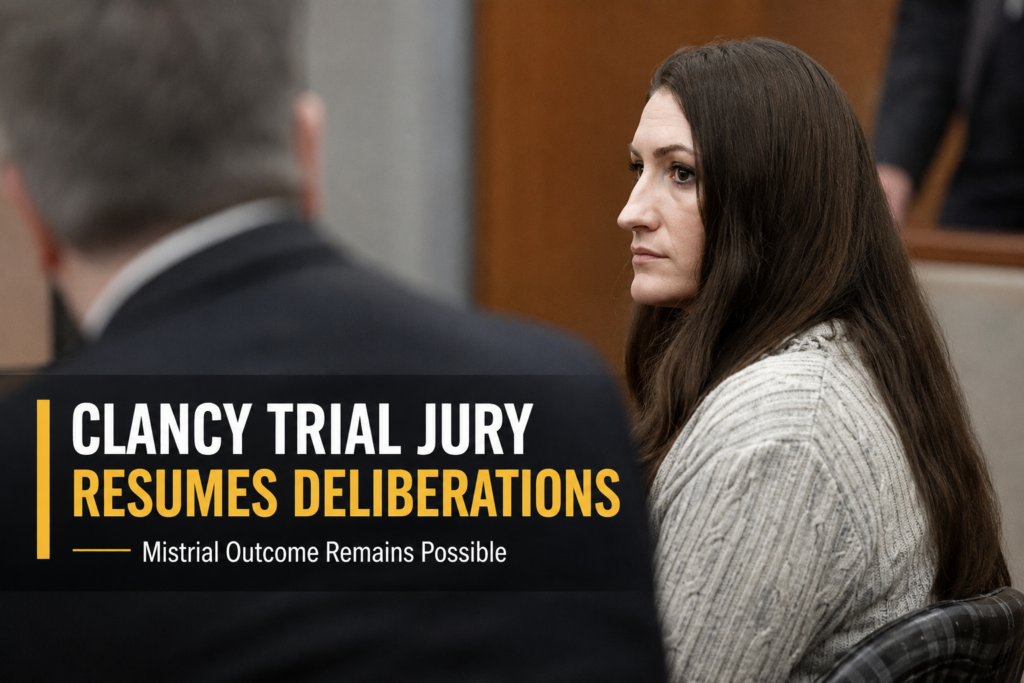
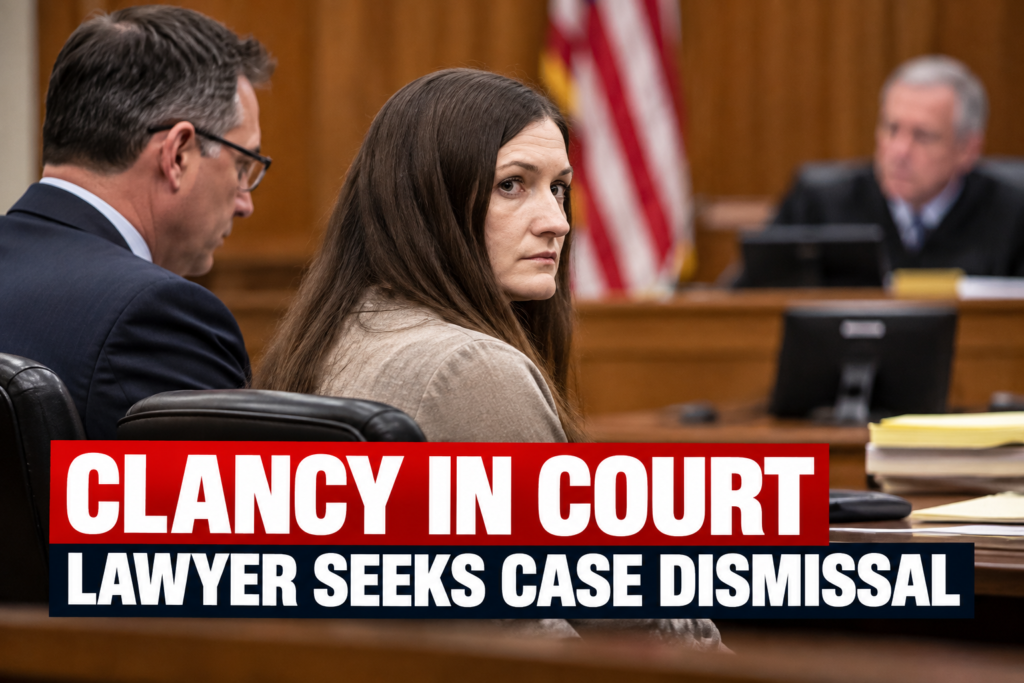
The Lindsay Clancy hearing on Tuesday, Sept. 29, 2026, moved her case into a new phase but settled very little. Clancy, 36, returned to Plymouth Superior Court in Massachusetts for the first time since her murder trial ended in a mistrial earlier this month. Judge William Sullivan set Nov. 2 for arguments on several major motions, and no retrial date was set.
A jury could not reach a verdict at Clancy’s trial. The defense now wants the case dismissed and a retrial barred, while prosecutors say they met their burden of proof. The judge gave prosecutors more time to respond and will hear the main arguments on Nov. 2.
What Happened at the Lindsay Clancy Hearing
Clancy sat beside her lawyer, Kevin Reddington, as the court opened. It was her first public appearance since the mistrial. Defense attorney Martin Weinberg, who joined the team to help with the double jeopardy argument, also took part.
Judge Sullivan began by reviewing the motions before the court. They included a renewed request for a required finding of not guilty, a motion to preserve juror records, and a request for an inquiry into the lone holdout juror, known in court papers as “Juror Doe.”
Supporters gathered outside the courthouse and followed the proceedings on their phones. Inside, the judge did not rule on the big questions. Instead, he set a fuller schedule for November.
Key Facts at a Glance
| Detail | What we know |
|---|---|
| Defendant | Lindsay Clancy, 36, a former labor and delivery nurse |
| Court | Plymouth Superior Court, Massachusetts |
| Judge | William Sullivan |
| Hearing date | Tuesday, Sept. 29, 2026 |
| Trial outcome | Mistrial after the jury failed to reach a unanimous verdict |
| Next hearing | Nov. 2, 2026 |
| Retrial date | None set |
Background: The Case and the Mistrial
Clancy is accused of killing her three children, Cora, Dawson and Callan, in January 2023. She has admitted the killings but pleaded not guilty to murder. Her defense argues she had postpartum psychosis at the time and should not be held criminally responsible.
Twelve jurors failed to reach a verdict, and the judge declared a mistrial earlier this month. Before that, the defense had asked the judge to remove one juror who, according to jury notes, was struggling to apply the law. The judge denied that request and instead repeated his instructions on reasonable doubt.
The Defense Asks the Judge to Find Clancy Not Guilty
Reddington told the court the evidence did not show that Clancy committed the crime with criminal responsibility. He questioned the quality of the police investigation and said the prosecution’s expert doctors were not qualified to speak to her mental state.
The defense also argues that the mistrial should not have been declared. In court filings, Reddington said 11 of the 12 jurors were prepared to find Clancy not criminally responsible. That figure comes from the defense, not from a court finding. The filings say the judge should have questioned the lone juror rather than end the trial, and that a retrial could violate double jeopardy protections.
Prosecutors Say They Met Their Burden
Prosecutor Shanan Buckingham said the defense was only now challenging evidence it had not said was missing during the trial. She argued the state presented numerous pieces of evidence showing Clancy was in a healthy mental state at the time of the killings.
Buckingham also explained that once a defendant raises a lack of criminal responsibility, prosecutors must prove beyond a reasonable doubt that it does not apply. She said the state can do that by showing no mental disease or defect, or by showing Clancy had substantial capacity. She added that prosecutors had presented a motive.
Prosecutors asked for more time to answer the defense’s 34-page memorandum, saying they learned only late last week that it would be heard. The judge agreed the motion was significant and moved it to Nov. 2.
Juror Notes and Sidebar Transcripts
Weinberg asked the court to release jury notes and sealed transcripts of private conversations held at the judge’s bench. He said the material could support the argument that a mistrial was not justified. He suggested limited redactions could protect juror anonymity.
Prosecutor Jennifer Sprague objected. She said events surrounding the case outside the courtroom have discouraged people from wanting to serve as jurors. A lawyer for the Boston Globe also asked the judge to open the sidebar discussions. Judge Sullivan took the juror-related motion under advisement and did not rule on Tuesday.
Gag Order Request Also Pushed to November
Prosecutors have asked the court to limit out-of-court statements to the media. Their motion says Reddington has commented publicly on how Clancy was doing and how witnesses testified, and on the jurors’ deliberations. WBZ-TV and Boston Globe Media Partners filed a motion opposing the request.
Judge Sullivan said the issue raises significant constitutional questions and will be addressed on Nov. 2 along with other pending items.
What Comes Next After the Hearing
The Nov. 2 hearing is expected to cover the motion to dismiss, the request for further inquiry into the holdout juror, and the gag order motion. Prosecutors will file a written opposition beforehand.
The state also has to decide whether to retry Clancy, seek lesser charges, negotiate a plea, or drop the case. That decision was not announced on Tuesday.
Lindsay Clancy Hearing: Frequently Asked Questions
This story involves the deaths of children. Details are based on court coverage from BBC News, CBS Boston, CNN, WBUR and PBS News.