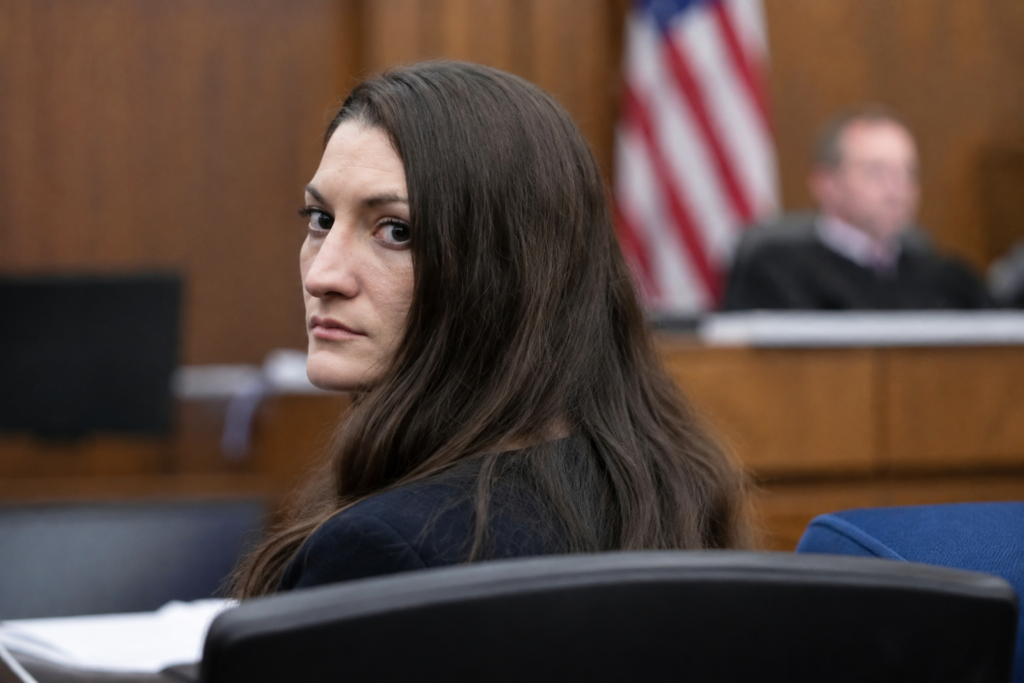
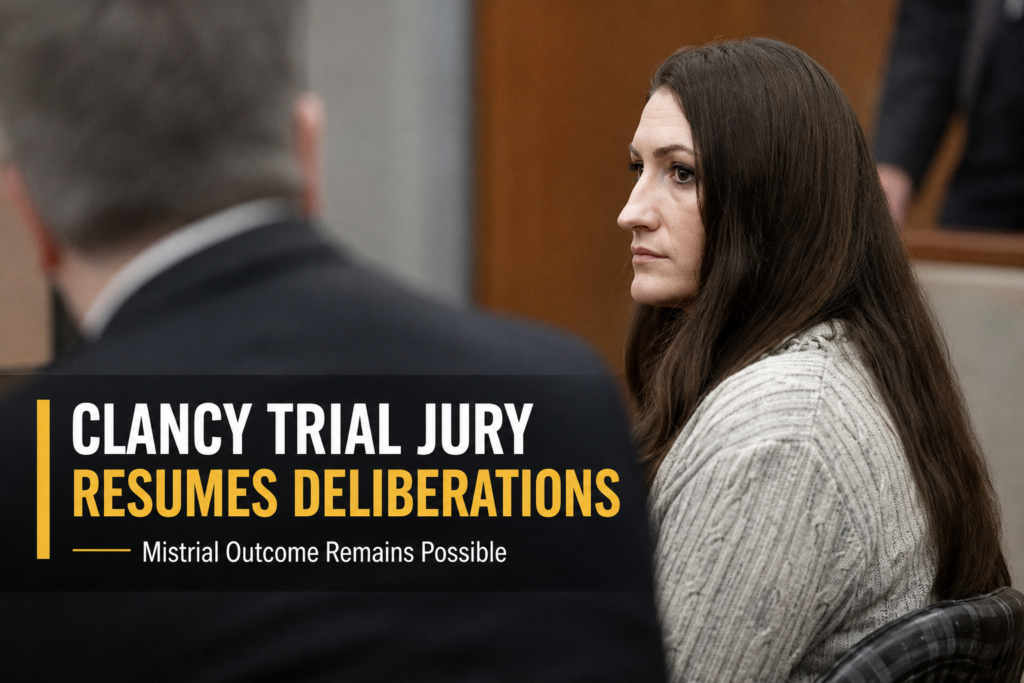
A Massachusetts jury spent a sixth straight day weighing the fate of Lindsay Clancy on Thursday, even after telling the judge twice that its members cannot agree on a verdict. The prolonged standoff has pushed the closely watched murder trial to the edge of a mistrial.
Clancy, a former labor and delivery nurse from Duxbury, is accused of killing her three young children in January 2023. Her defense says she was in the grip of severe postpartum psychosis at the time. Prosecutors argue she understood what she was doing and should be held criminally responsible.
What Happened
Plymouth Superior Court Judge William Sullivan sent the 12-person jury back to the deliberation room Wednesday afternoon after it reported for a second time that it could not reach a unanimous decision. Before doing so, the judge read jurors a rarely used instruction, sometimes called a “dynamite charge,” that gives a deadlocked jury one final push toward a verdict.
By Thursday, the panel had logged more than 33 hours of deliberations since receiving the case on August 27. Under Massachusetts procedure, a judge may send a jury back to deliberate after reporting a deadlock, but a third impasse typically leaves a mistrial as the only remaining option, unless jurors themselves agree to keep going.
The jury in the Lindsay Clancy murder trial has now told the judge twice that it is deadlocked. Legal analysts say a third deadlock would likely force Judge Sullivan to declare a mistrial, which would leave prosecutors to decide whether to retry the case, offer a plea deal, or drop the charges.
Key Facts
| Detail | Information |
|---|---|
| Defendant | Lindsay Clancy, former Duxbury nurse |
| Charges | Three counts of first-degree murder |
| Victims | Cora, 5; Dawson, 3; Callan, 8 months |
| Incident date | January 24, 2023, in Duxbury, Massachusetts |
| Jury composition | Nine women, three men |
| Deliberation length | More than 33 hours over six days |
| Possible verdicts | First-degree murder, second-degree murder, manslaughter, not guilty, or not guilty by reason of insanity |
Official Statements
CBS News legal contributor Caroline Polisi said Thursday that the jury appeared to have reached the limit of what further deliberation could accomplish, predicting the panel would ultimately tell the judge it remains hopelessly split. She noted that pushing jurors further than legally required risks producing a coercive verdict that could be overturned on appeal.
Boston defense attorney Peter Elikann told reporters this week that once a jury reports a deadlock for a third time, the judge is generally required to declare a mistrial unless jurors agree to keep working. He described the current stage of deliberations as the case’s final push toward resolution, one way or another.
Clancy’s defense attorney, Kevin Reddington, has indicated he would be prepared to retry the case quickly if jurors cannot agree. Prosecutors have not said publicly how they would proceed if the trial ends without a verdict.
Background
Clancy has pleaded not guilty to first-degree murder in the strangulation deaths of her three children at the family’s Duxbury home. Her defense team argued during weeks of testimony that she was overmedicated and suffering from severe postpartum psychosis, a rare but serious mental health condition, and did not understand the nature of her actions. Prosecutors countered that she acted with intent and knew the difference between right and wrong at the time.
The jury has had to review testimony from more than 80 witnesses and roughly 300 pieces of evidence, according to court proceedings. Jurors have also asked to re-examine physical evidence, including pill bottles, during their deliberations.
Why It Matters
The case has drawn national attention as a test of how the criminal justice system handles claims of severe postpartum mental illness. Mental health advocates have pointed to the trial as evidence that the health care system needs better tools to identify and treat postpartum psychosis before a crisis occurs.
Legal observers say the split jury also reflects a broader public divide over the case. Polisi noted that disagreement among jurors mirrors the debate playing out among the public, many of whom have followed the trial closely since it began.
What’s Next
If jurors report a third deadlock, Judge Sullivan is expected to declare a mistrial. Legal analysts say prosecutors would then face several options: retry the case before a new jury, seek a plea agreement on reduced charges, or, less likely, drop the charges altogether. Reddington has said he would be ready to defend Clancy again within days if a new trial is ordered.
Attorneys on both sides are also expected to try to speak with jurors after any mistrial is declared, hoping to learn which arguments resonated and which did not, information that could shape how the case is presented if it goes to trial a second time.
FAQ
What happens if the Lindsay Clancy jury cannot reach a verdict?
The judge would declare a mistrial. Prosecutors could then choose to retry the case, negotiate a plea deal, or drop the charges.
What is a “dynamite charge”?
It is a special instruction judges give to a deadlocked jury, urging members to reconsider their positions and make one more effort to reach a unanimous verdict before a mistrial is declared.
What is Clancy accused of?
She faces three counts of first-degree murder in the deaths of her children, Cora, Dawson, and Callan, who died in their Duxbury home in January 2023.
What is Clancy’s defense?
Her attorneys argue she was suffering from postpartum psychosis and was not criminally responsible for her actions at the time.